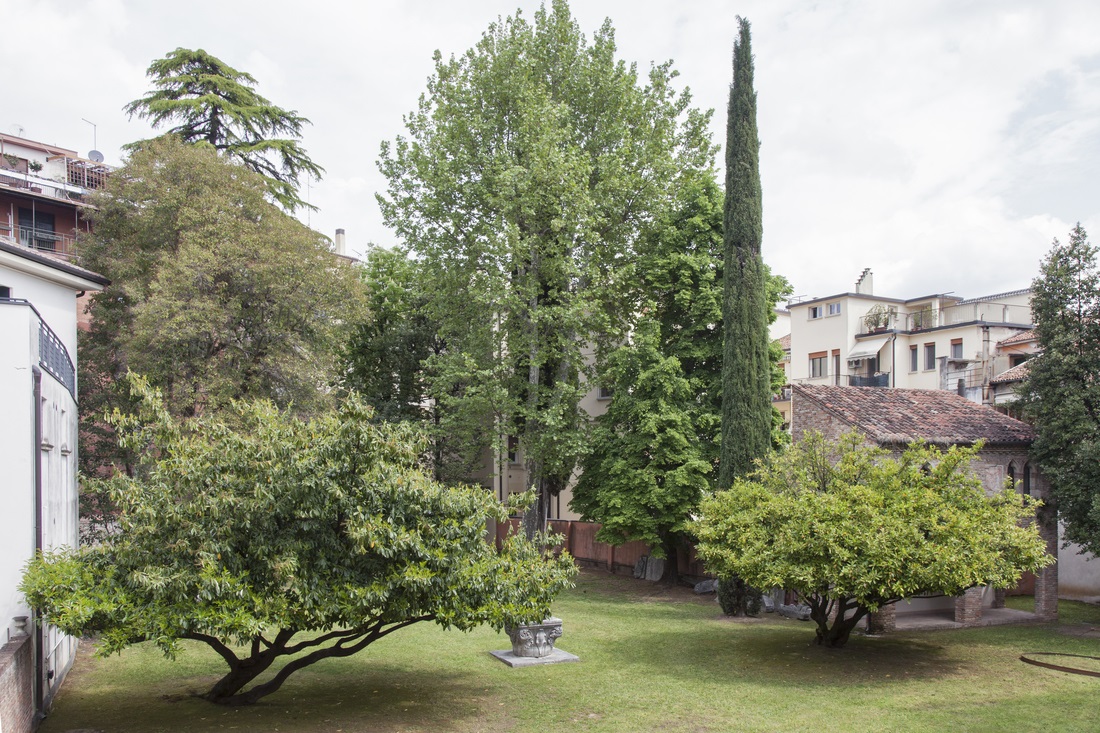
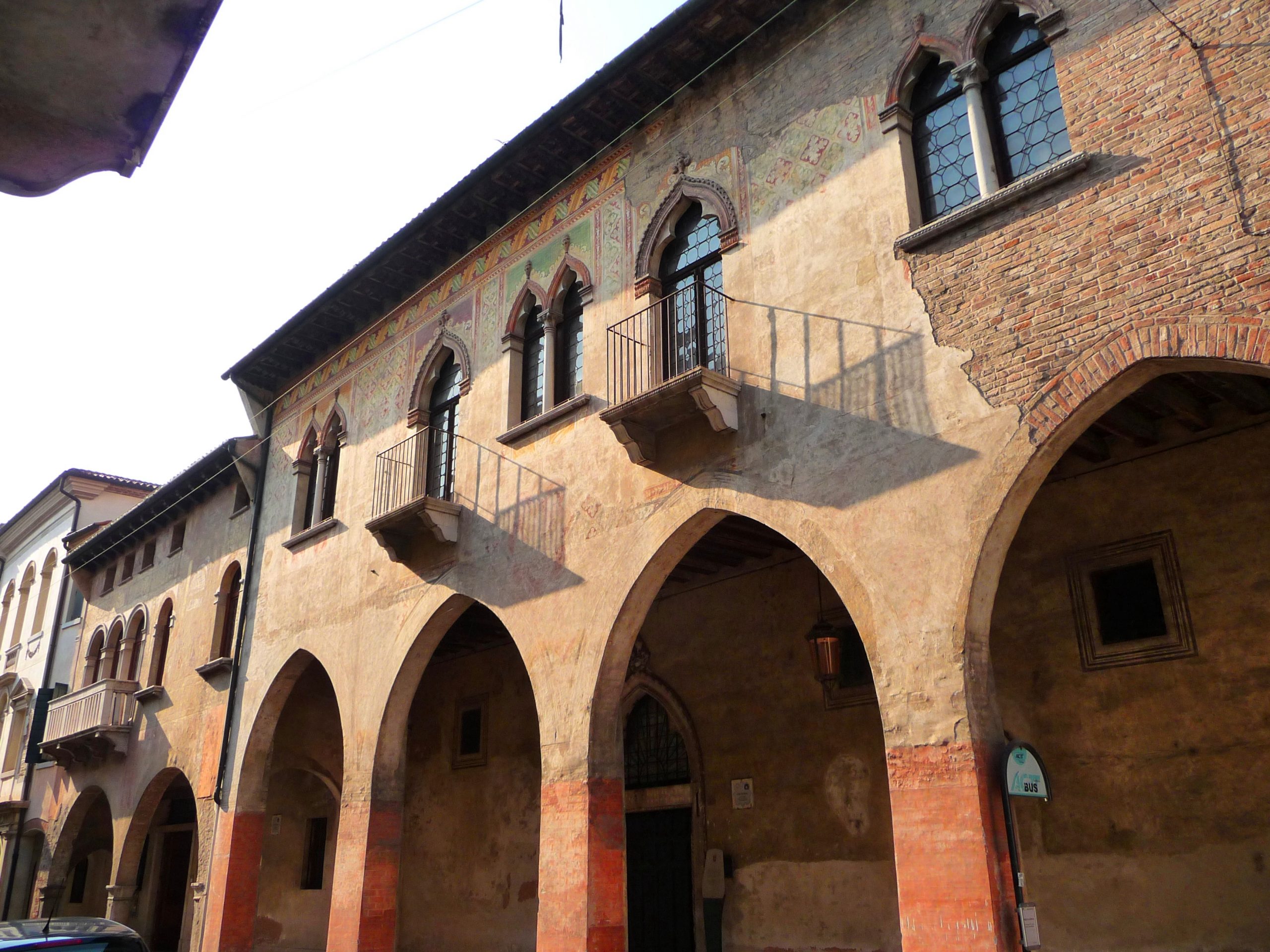
While the health emergency has challenged many cultural institutions, Treviso is now preparing to open the doors of an experimental center in the heart of the city. The project, hosted at Ca’ Robegan, in what was once the Museum of Applied Arts, aims to promote exchange between art and business as a driver of contamination and sharing of ideas.
This ambitious and innovative initiative is born from a partnership between institutions—the Municipality of Treviso, the Department of Management at Ca’ Foscari University (a leader in Italy for research and education on the relationships between art, business, culture, and the economy), TRA Treviso Arte e Ricerca (a cultural association active for years in promoting contemporary art in the Treviso area)—and the local business community.
Ca’ Robegan will become a reference point for the city and its territory, connecting cultural entrepreneurs and companies to create new projects and processes.
“Ca’ Robegan will not only be a venue for exhibitions but also an open workshop dedicated to contemporary art and applied arts. It will be a living laboratory where artists apply their vision and languages to the economy, and businesses can benefit from the innovative potential that applied creativity can unleash,” declared Mario Conte, Mayor of Treviso.
The main target audience of the new experimental center in Treviso will therefore be “on one side, managers and entrepreneurs who will have the opportunity to explore the potential of concrete collaboration with art and culture professionals; and on the other side, cultural operators who will be able to discover the opportunities of a strategic relationship with the business world.”
All of this will take place through a rich training program starting in the fall, with workshops and conferences on contemporary art; exhibitions are planned from March, beginning with a major show curated by Carlo Sala focused on the relationship between contemporary art and sport, a sector in which the Treviso area hosts some of the world’s most important companies and brands.
The dialogue between art and business in the Treviso territory did not begin exclusively with the Ca’ Robegan project. For years, the Department of Management has initiated a series of exchanges and collaborations, bringing artistic language directly into production sites.
One recent initiative is SMATH, a project that enabled six artist residencies in as many Veneto companies, aiming to apply different artistic languages to heterogeneous businesses.
The project’s protagonists include: Kensuke Koike, Japanese visual artist, for Contarina spa (Spresiano, Treviso); the digital artist collective D20 Art Lab for Electrolux spa (Susegana, Treviso); Špela Volčič, Slovenian visual artist and photographer, for Pane Quotidiano; Studio Tonnato (Venice) for F/Art (Preganziol, Treviso); Teoria&Preda for Gv3 Venpa spa (Dolo, Venice); and Alessio Ballerini and Simona Sala (Ancona/Turin) for the social cooperative Verlata (Villaverla, Vicenza).
It is no longer a matter of mere sponsorship, collecting, or philanthropy applied to the art world, but rather a new way of conceiving corporate culture by stimulating new strategic visions.
“‘Artistic thinking’ helps make companies more competitive” argues Fabrizio Panozzo, Professor of Management at Ca’ Foscari University: “The sharing of corporate culture through encounters with artists creates a context for thinking outside the box and should therefore be seen as an investment in innovation.”
Art, then, does not enter companies merely as decorative intervention, but to generate synergies and the development of new products and services. It is a new way of “producing” brand identity through the cross-pollination of different skills.